Revolutionizing Table Tennis: Ace Robot Takes on Human Opponents with Unmatched Precision
By TechGuru • 2026-04-26T03:00:14.044056
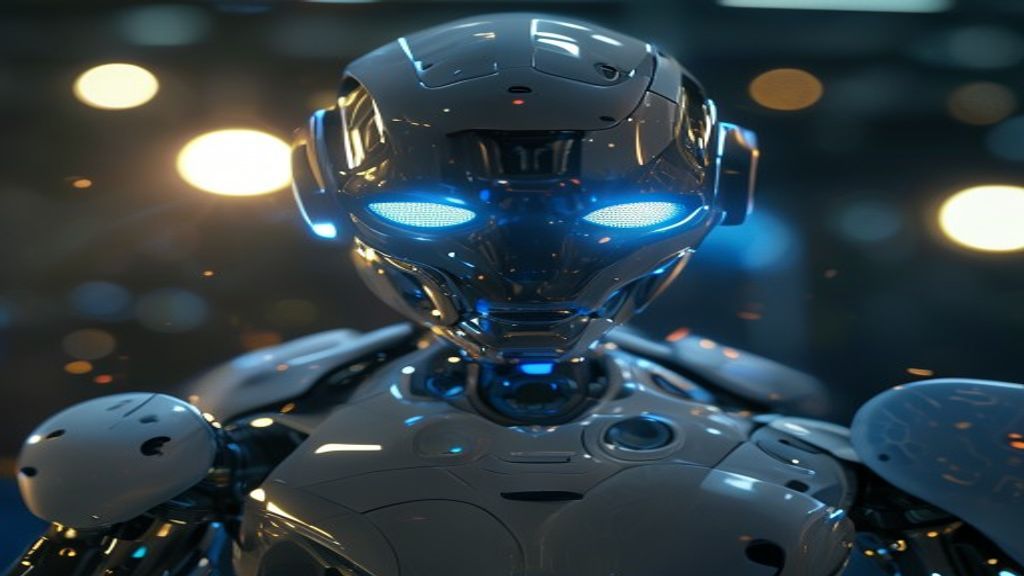
In a breakthrough that could redefine the future of table tennis, a new robot named Ace has been unveiled, capable of reading the trajectory of a ball, adjusting the racket angle, and responding with strokes that keep the exchange alive against real players. This development marks a significant leap in robotics and artificial intelligence, showcasing the potential for machines to not only mimic but potentially surpass human capabilities in complex, high-speed activities.
The technology behind Ace is based on advanced algorithms and high-speed vision systems that allow it to track the ball's movement and predict its trajectory with high accuracy. This enables Ace to react swiftly and precisely, making shots that would be challenging even for professional players. The implications of such technology extend beyond the realm of table tennis, suggesting potential applications in various fields where speed, precision, and adaptability are crucial.
For everyday users, this could mean a new level of engagement with sports and fitness, as interactive robots like Ace could provide personalized training and entertainment. From an industry perspective, the development of Ace highlights the growing intersection of sports, technology, and artificial intelligence, potentially leading to new business models and revenue streams. This shift could reshape how we approach sports training, entertainment, and even rehabilitation, offering tailored experiences that were previously unimaginable.
The competitive landscape of table tennis is also likely to be impacted, as Ace and similar robots could become integral parts of training regimens for professional players. The ability to practice against a consistently high-level opponent could elevate the sport, leading to more intense and skilled matches. Moreover, the technological advancements demonstrated by Ace could inspire innovations in related areas, such as materials science and mechanical engineering, driving progress in fields beyond sports.
As the world witnesses the advent of robots capable of competing with humans in complex activities, it raises intriguing questions about the future of competition, collaboration, and entertainment. The emergence of Ace as a table tennis opponent underscores the rapid evolution of robotics and AI, challenging our current understanding of what machines can do and how they can interact with us. This is not just about a robot playing table tennis; it's about the potential for machines to engage with humans in increasingly sophisticated ways, changing the dynamics of interaction across various domains.
The development of Ace and its potential successors will undoubtedly be watched with great interest, not only by the sports community but also by those fascinated by the potential of technology to transform human experience. As we move forward, it will be essential to consider the ethical, social, and economic implications of such advancements, ensuring that the benefits of technological progress are equitably distributed and that the challenges are addressed with foresight and responsibility.
In conclusion, the introduction of Ace, the ping-pong robot, signifies a pivotal moment in the history of robotics and sports, offering a glimpse into a future where humans and machines interact in unprecedented ways. Whether as opponents, partners, or simply as fascinating entities to observe, robots like Ace are set to leave an indelible mark on our world, challenging our assumptions and inspiring new generations of innovators and enthusiasts alike.
The technology behind Ace is based on advanced algorithms and high-speed vision systems that allow it to track the ball's movement and predict its trajectory with high accuracy. This enables Ace to react swiftly and precisely, making shots that would be challenging even for professional players. The implications of such technology extend beyond the realm of table tennis, suggesting potential applications in various fields where speed, precision, and adaptability are crucial.
For everyday users, this could mean a new level of engagement with sports and fitness, as interactive robots like Ace could provide personalized training and entertainment. From an industry perspective, the development of Ace highlights the growing intersection of sports, technology, and artificial intelligence, potentially leading to new business models and revenue streams. This shift could reshape how we approach sports training, entertainment, and even rehabilitation, offering tailored experiences that were previously unimaginable.
The competitive landscape of table tennis is also likely to be impacted, as Ace and similar robots could become integral parts of training regimens for professional players. The ability to practice against a consistently high-level opponent could elevate the sport, leading to more intense and skilled matches. Moreover, the technological advancements demonstrated by Ace could inspire innovations in related areas, such as materials science and mechanical engineering, driving progress in fields beyond sports.
As the world witnesses the advent of robots capable of competing with humans in complex activities, it raises intriguing questions about the future of competition, collaboration, and entertainment. The emergence of Ace as a table tennis opponent underscores the rapid evolution of robotics and AI, challenging our current understanding of what machines can do and how they can interact with us. This is not just about a robot playing table tennis; it's about the potential for machines to engage with humans in increasingly sophisticated ways, changing the dynamics of interaction across various domains.
The development of Ace and its potential successors will undoubtedly be watched with great interest, not only by the sports community but also by those fascinated by the potential of technology to transform human experience. As we move forward, it will be essential to consider the ethical, social, and economic implications of such advancements, ensuring that the benefits of technological progress are equitably distributed and that the challenges are addressed with foresight and responsibility.
In conclusion, the introduction of Ace, the ping-pong robot, signifies a pivotal moment in the history of robotics and sports, offering a glimpse into a future where humans and machines interact in unprecedented ways. Whether as opponents, partners, or simply as fascinating entities to observe, robots like Ace are set to leave an indelible mark on our world, challenging our assumptions and inspiring new generations of innovators and enthusiasts alike.