Falcon 9 Rocket on Collision Course with Moon: A 7-Time Speed of Sound Impact
By Libertarian • 2026-04-30T08:00:46.264120
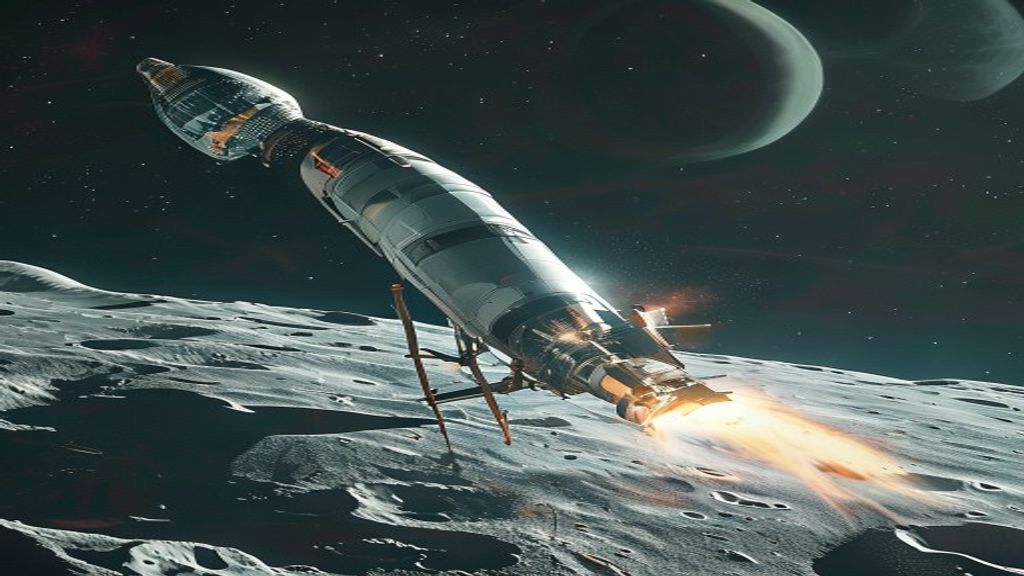
Astronomers are tracking the upper stage of a Falcon 9 rocket launched in early 2025, which is expected to collide with the Moon this summer. The impact, predicted to occur on August 5 at 2:44 am ET, will be a rare event, with the rocket's upper stage striking the lunar surface at seven times the speed of sound.
The Moon, devoid of an atmosphere, will offer no resistance to the rocket's descent, ensuring it will hit the surface intact. This event is a consequence of the increasing number of space missions and the resultant space debris. The Falcon 9 rocket, 13.8 meters tall and 3.7 meters in diameter, was initially used for a launch, and its upper stage has been floating in space since.
For everyday users, this event might seem like a mere spectacle, but it highlights the growing issue of space debris. As space agencies and private companies launch more missions, the risk of collisions and the accumulation of junk in Earth's orbit and beyond become more pressing concerns.
From an industry perspective, this incident underscores the need for better tracking and management of space debris. Companies like SpaceX, which operates the Falcon 9 rocket, and space agencies around the world must develop strategies to mitigate the risks associated with space junk. This could involve designing rockets and satellites with disposal methods in mind or creating technologies to remove existing debris from orbits.
The implications extend beyond the immediate concern of space debris. As humans venture further into space, understanding and managing the environmental impact of our activities becomes crucial. This includes not just the physical debris but also the potential for contamination of other planets and moons. The Falcon 9 rocket's collision with the Moon serves as a reminder of the complex challenges ahead in space exploration and the need for sustainable practices.
The event, although predicted to be too faint to be seen by Earth-based telescopes, will provide valuable insights into the effects of high-speed impacts on the lunar surface. Scientists will be keenly watching the event to learn more about the Moon's geology and the physics of such impacts. This knowledge can contribute to better planning for future lunar missions, including how to protect both the Moon and Earth from the hazards of space debris.
In conclusion, the impending collision of the Falcon 9 rocket with the Moon is more than just a rare astronomical event; it's a call to action for the space industry. It highlights the importance of responsible space exploration and the need for innovative solutions to the challenges posed by space debris. As we move forward in our ventures into space, ensuring that our activities are sustainable and respectful of the celestial environment will be crucial for the long-term success of space exploration.
The Moon, devoid of an atmosphere, will offer no resistance to the rocket's descent, ensuring it will hit the surface intact. This event is a consequence of the increasing number of space missions and the resultant space debris. The Falcon 9 rocket, 13.8 meters tall and 3.7 meters in diameter, was initially used for a launch, and its upper stage has been floating in space since.
For everyday users, this event might seem like a mere spectacle, but it highlights the growing issue of space debris. As space agencies and private companies launch more missions, the risk of collisions and the accumulation of junk in Earth's orbit and beyond become more pressing concerns.
From an industry perspective, this incident underscores the need for better tracking and management of space debris. Companies like SpaceX, which operates the Falcon 9 rocket, and space agencies around the world must develop strategies to mitigate the risks associated with space junk. This could involve designing rockets and satellites with disposal methods in mind or creating technologies to remove existing debris from orbits.
The implications extend beyond the immediate concern of space debris. As humans venture further into space, understanding and managing the environmental impact of our activities becomes crucial. This includes not just the physical debris but also the potential for contamination of other planets and moons. The Falcon 9 rocket's collision with the Moon serves as a reminder of the complex challenges ahead in space exploration and the need for sustainable practices.
The event, although predicted to be too faint to be seen by Earth-based telescopes, will provide valuable insights into the effects of high-speed impacts on the lunar surface. Scientists will be keenly watching the event to learn more about the Moon's geology and the physics of such impacts. This knowledge can contribute to better planning for future lunar missions, including how to protect both the Moon and Earth from the hazards of space debris.
In conclusion, the impending collision of the Falcon 9 rocket with the Moon is more than just a rare astronomical event; it's a call to action for the space industry. It highlights the importance of responsible space exploration and the need for innovative solutions to the challenges posed by space debris. As we move forward in our ventures into space, ensuring that our activities are sustainable and respectful of the celestial environment will be crucial for the long-term success of space exploration.