Bowser's New Kingdom: Hasbro's Ambitious Gaming Push
By JTZ • 2026-01-22 07:11:36
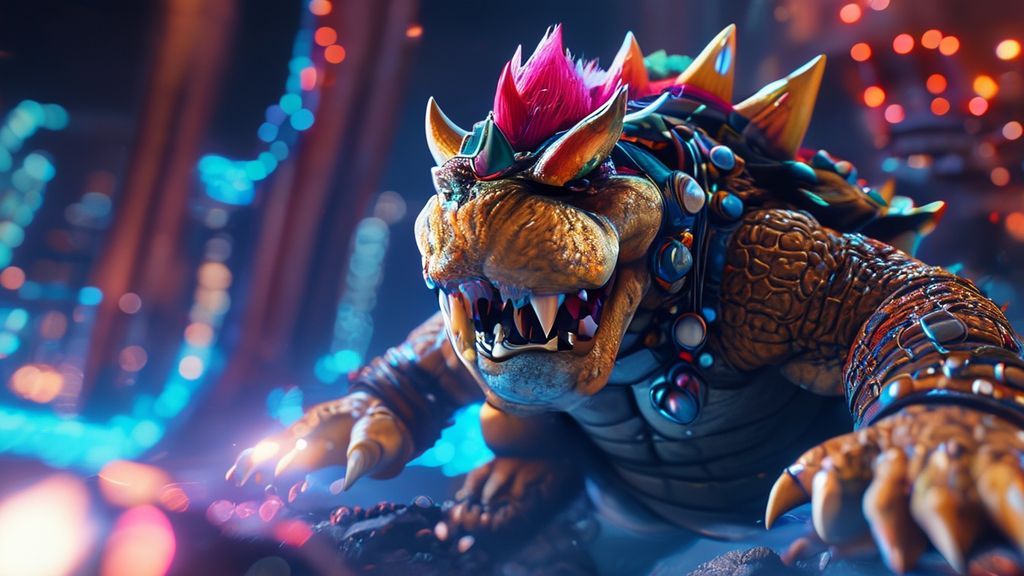
From the hallowed halls of Nintendo to the boardroom of Hasbro, a notable shift signals more than just a personal career move. The appointment of former Nintendo of America head Doug Bowser to Hasbro's board of directors isn't merely a high-profile executive transition; it’s a potent indicator of the toy and entertainment giant's aggressive pivot into the highly competitive video game development arena. This convergence of seasoned gaming leadership with a legacy IP powerhouse suggests a strategic reorientation that could redefine Hasbro's digital future.
Weeks after retiring from his impactful tenure as Nintendo of America's president, Doug Bowser was announced as the newest addition to Hasbro's board of directors on Tuesday. While Hasbro's official press release remained light on the specifics of Bowser's mandate, the underlying strategic intent is clear: a profound acceleration of the company's video game ambitions. Hasbro, a behemoth known for its vast intellectual property portfolio including 'Magic: The Gathering' and 'Dungeons & Dragons,' has historically relied on licensing these valuable assets to third-party developers. However, Chief Marketing Officer Jason Bunge recently confirmed a significant shift, stating the company aims to develop its first internal video game this year, marking a more direct and integrated foray into the gaming industry.
Hasbro's journey with digital entertainment has been circuitous. Decades ago, the company briefly ventured into direct game publishing with Hasbro Interactive, acquiring assets like MicroProse and publishing titles such as 'RollerCoaster Tycoon' and 'Planescape: Torment.' However, by 2001, Hasbro Interactive was sold to Infogrames (now Atari SA) for $100 million, largely exiting the direct publishing space. This historical context underscores the inherent challenges for traditional toy and board game companies attempting to navigate the volatile video game sector. Other giants like Mattel have similarly foundered in direct game development, often struggling to reconcile their core business models with the distinct demands of software production. Yet, Hasbro has recently enjoyed immense success through its licensing model, exemplified by Larian Studios' critically acclaimed 'Baldur's Gate 3,' which has sold over 10 million copies since its release, and the enduring popularity of 'Magic: The Gathering Arena,' developed by its subsidiary Wizards of the Coast.
The broader industry landscape further illuminates Hasbro's strategic imperative. The global video game market, projected to reach over $280 billion by 2024, now dwarfs the film and music industries combined. Intellectual property has become the new gold standard in entertainment, with companies like Disney, Warner Bros., and Netflix increasingly investing in gaming as a primary extension of their universes. The trend is clear: established brands are seeking greater control over the digital manifestations of their IPs, moving beyond mere licensing to capture more revenue and ensure creative alignment. The high barriers to entry, including monumental development costs, fierce talent acquisition battles, and complex marketing strategies, make this a high-stakes endeavor for any newcomer, even one as well-resourced as Hasbro.
Doug Bowser's appointment carries immediate and profound implications. His 15-year tenure at Nintendo, culminating in his leadership of Nintendo of America during the meteoric rise of the Switch console, provides unparalleled expertise in platform strategy, software launches, and navigating a diverse, global gaming market. Bowser’s intimate understanding of first-party IP management, digital distribution, and community engagement—all hallmarks of Nintendo's success—will be invaluable to Hasbro. This isn't merely a ceremonial board role; it signals a serious intent to leverage his deep operational knowledge to guide Hasbro's nascent internal development efforts, particularly as the company targets its first game release within the current year. His presence implicitly suggests a commitment to building robust internal capabilities rather than merely dabbling.
In the long term, this move signals Hasbro’s intent to transform from a predominantly IP licensing powerhouse into a hybrid developer-publisher. The potential rewards are substantial: greater revenue capture from successful titles, enhanced creative control over beloved franchises, and deeper integration of digital experiences with physical products. However, the risks are equally significant. Diluting valuable IPs with mediocre internal games could damage brand equity, a catastrophic outcome for a company whose valuation is intrinsically tied to its intellectual property. The challenge of cultivating a credible internal game development culture, distinct from its core toy and board game operations, will be formidable. Success here could significantly boost Hasbro's market valuation and secure its relevance in an increasingly digital entertainment ecosystem, potentially paving the way for strategic acquisitions of established game studios.
In this strategic pivot, Hasbro and its shareholders stand as potential major winners. Greater direct control over IP monetization in the gaming space could unlock substantial new revenue streams, driving increased profitability and shareholder value. Talented game developers, particularly those seeking to work with globally recognized IPs, may also benefit from new employment opportunities as Hasbro builds out its internal studios. Conversely, existing third-party licensing partners, while not immediately displaced, could face long-term threats. As Hasbro develops its own capabilities, it may reduce reliance on external studios for its most prominent IPs, shifting lucrative projects internally or to preferred partners. This could intensify competition in the licensed game development sector, potentially squeezing smaller or less established publishers.
The immediate future will see Hasbro's first internally developed video game emerge by the end of 2024. This initial foray is likely to be a carefully managed, perhaps mid-tier or mobile-focused title, designed to test the waters and establish foundational development pipelines rather than a blockbuster 'Dungeons & Dragons' RPG. Within the next 12 to 24 months, expect strategic hires of veteran game producers and directors, coupled with potential targeted acquisitions of smaller, specialized game studios to accelerate capability building. Bowser's influence will undeniably be critical in shaping this strategic roadmap, guiding portfolio decisions, and fostering a culture conducive to successful game development. The emphasis will remain on leveraging existing iconic IPs, but also exploring how to create new digital-first experiences that complement Hasbro’s broader entertainment ambitions.
Hasbro's move, solidified by Doug Bowser's appointment, marks a critical inflection point for the company. It’s a high-stakes gamble to transform from an IP licensor to an integrated game developer, a strategy that could unlock immense value or lead to costly missteps. The success of this audacious pivot will hinge on strategic execution and a deep understanding of the gaming landscape, areas where Bowser's expertise will be invaluable.
Weeks after retiring from his impactful tenure as Nintendo of America's president, Doug Bowser was announced as the newest addition to Hasbro's board of directors on Tuesday. While Hasbro's official press release remained light on the specifics of Bowser's mandate, the underlying strategic intent is clear: a profound acceleration of the company's video game ambitions. Hasbro, a behemoth known for its vast intellectual property portfolio including 'Magic: The Gathering' and 'Dungeons & Dragons,' has historically relied on licensing these valuable assets to third-party developers. However, Chief Marketing Officer Jason Bunge recently confirmed a significant shift, stating the company aims to develop its first internal video game this year, marking a more direct and integrated foray into the gaming industry.
Hasbro's journey with digital entertainment has been circuitous. Decades ago, the company briefly ventured into direct game publishing with Hasbro Interactive, acquiring assets like MicroProse and publishing titles such as 'RollerCoaster Tycoon' and 'Planescape: Torment.' However, by 2001, Hasbro Interactive was sold to Infogrames (now Atari SA) for $100 million, largely exiting the direct publishing space. This historical context underscores the inherent challenges for traditional toy and board game companies attempting to navigate the volatile video game sector. Other giants like Mattel have similarly foundered in direct game development, often struggling to reconcile their core business models with the distinct demands of software production. Yet, Hasbro has recently enjoyed immense success through its licensing model, exemplified by Larian Studios' critically acclaimed 'Baldur's Gate 3,' which has sold over 10 million copies since its release, and the enduring popularity of 'Magic: The Gathering Arena,' developed by its subsidiary Wizards of the Coast.
The broader industry landscape further illuminates Hasbro's strategic imperative. The global video game market, projected to reach over $280 billion by 2024, now dwarfs the film and music industries combined. Intellectual property has become the new gold standard in entertainment, with companies like Disney, Warner Bros., and Netflix increasingly investing in gaming as a primary extension of their universes. The trend is clear: established brands are seeking greater control over the digital manifestations of their IPs, moving beyond mere licensing to capture more revenue and ensure creative alignment. The high barriers to entry, including monumental development costs, fierce talent acquisition battles, and complex marketing strategies, make this a high-stakes endeavor for any newcomer, even one as well-resourced as Hasbro.
Doug Bowser's appointment carries immediate and profound implications. His 15-year tenure at Nintendo, culminating in his leadership of Nintendo of America during the meteoric rise of the Switch console, provides unparalleled expertise in platform strategy, software launches, and navigating a diverse, global gaming market. Bowser’s intimate understanding of first-party IP management, digital distribution, and community engagement—all hallmarks of Nintendo's success—will be invaluable to Hasbro. This isn't merely a ceremonial board role; it signals a serious intent to leverage his deep operational knowledge to guide Hasbro's nascent internal development efforts, particularly as the company targets its first game release within the current year. His presence implicitly suggests a commitment to building robust internal capabilities rather than merely dabbling.
In the long term, this move signals Hasbro’s intent to transform from a predominantly IP licensing powerhouse into a hybrid developer-publisher. The potential rewards are substantial: greater revenue capture from successful titles, enhanced creative control over beloved franchises, and deeper integration of digital experiences with physical products. However, the risks are equally significant. Diluting valuable IPs with mediocre internal games could damage brand equity, a catastrophic outcome for a company whose valuation is intrinsically tied to its intellectual property. The challenge of cultivating a credible internal game development culture, distinct from its core toy and board game operations, will be formidable. Success here could significantly boost Hasbro's market valuation and secure its relevance in an increasingly digital entertainment ecosystem, potentially paving the way for strategic acquisitions of established game studios.
In this strategic pivot, Hasbro and its shareholders stand as potential major winners. Greater direct control over IP monetization in the gaming space could unlock substantial new revenue streams, driving increased profitability and shareholder value. Talented game developers, particularly those seeking to work with globally recognized IPs, may also benefit from new employment opportunities as Hasbro builds out its internal studios. Conversely, existing third-party licensing partners, while not immediately displaced, could face long-term threats. As Hasbro develops its own capabilities, it may reduce reliance on external studios for its most prominent IPs, shifting lucrative projects internally or to preferred partners. This could intensify competition in the licensed game development sector, potentially squeezing smaller or less established publishers.
The immediate future will see Hasbro's first internally developed video game emerge by the end of 2024. This initial foray is likely to be a carefully managed, perhaps mid-tier or mobile-focused title, designed to test the waters and establish foundational development pipelines rather than a blockbuster 'Dungeons & Dragons' RPG. Within the next 12 to 24 months, expect strategic hires of veteran game producers and directors, coupled with potential targeted acquisitions of smaller, specialized game studios to accelerate capability building. Bowser's influence will undeniably be critical in shaping this strategic roadmap, guiding portfolio decisions, and fostering a culture conducive to successful game development. The emphasis will remain on leveraging existing iconic IPs, but also exploring how to create new digital-first experiences that complement Hasbro’s broader entertainment ambitions.
Hasbro's move, solidified by Doug Bowser's appointment, marks a critical inflection point for the company. It’s a high-stakes gamble to transform from an IP licensor to an integrated game developer, a strategy that could unlock immense value or lead to costly missteps. The success of this audacious pivot will hinge on strategic execution and a deep understanding of the gaming landscape, areas where Bowser's expertise will be invaluable.